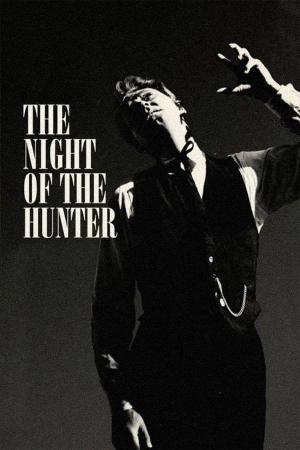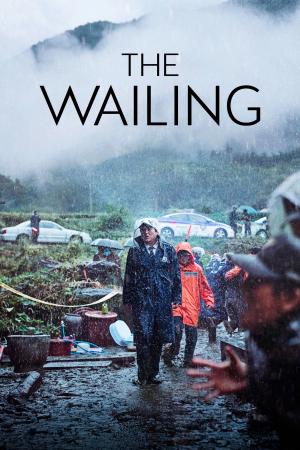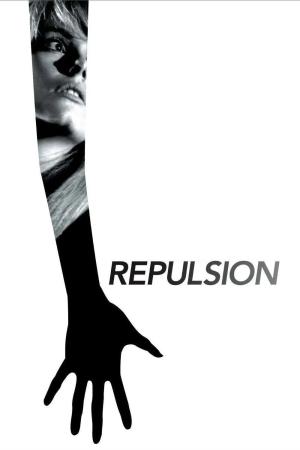

9.5/10
4/10
7.5/10
9.5/10
9/10
10/10
The House That Horror Built: Class Warfare as Gothic Nightmare
Bong Joon-ho's Parasite operates as a Trojan horse of genre cinema, presenting itself as a darkly comic social thriller before revealing its true nature as one of the most sophisticated horror films ever created—a work that understands that the greatest monsters aren't supernatural entities but the systemic inequalities that turn human beings into predators and prey. This is horror disguised as prestige drama, a film that uses the architecture of class division to construct a Gothic mansion where the real terror comes not from ghosts in the basement but from the living hell of economic desperation.
The genius of Parasite lies in how Bong gradually transforms what begins as a clever con-artist caper into something approaching pure nightmare. The Kim family's infiltration of the wealthy Park household starts as almost comedic wish fulfillment—the poor outsmarting the rich through cunning and desperation. But as the film progresses, it becomes clear that we're watching something far more sinister: a story about how capitalism transforms everyone into parasites, feeding off each other in an endless cycle of exploitation and survival.
The performances across the board achieve that rare quality of feeling completely naturalistic while serving the film's increasingly surreal narrative demands. Song Kang-ho as Ki-taek delivers a masterclass in slow-burn character development, his genial patriarch gradually revealing depths of rage and desperation that make his final transformation feel both shocking and inevitable. Choi Woo-shik as Ki-woo captures the particular arrogance of youth combined with economic desperation, while Park So-dam as Ki-jung creates a character whose intelligence and adaptability become both her greatest assets and potential downfall.
The Park family, led by Lee Sun-kyun and Cho Yeo-jeong as Dong-ik and Yeon-kyo, represents something more complex than simple villains—they're monsters of casual indifference rather than active malice. Their horror lies not in what they do but in what they don't see, their ability to remain completely oblivious to the suffering that literally exists beneath their feet. This willful blindness becomes its own form of violence, perhaps more devastating than any physical assault.
Bong's visual language creates a world where architecture becomes character and geography becomes destiny. The film's famous use of vertical space—from the Kims' semi-basement to the Parks' elevated mansion to the bunker hidden below—creates a literal representation of social hierarchy that feels both metaphorically rich and viscerally oppressive. Cinematographer Hong Kyung-pyo captures these spaces with surgical precision, making every frame feel deliberately composed while maintaining naturalistic authenticity.
The contrast between the two houses becomes a study in how physical space reflects and reinforces social position. The Parks' home, with its clean lines and abundant natural light, represents not just wealth but the luxury of aesthetic choice, while the Kims' semi-basement, prone to flooding and invasion by drunk urinator, literalizes their precarious position between respectability and complete destitution.
The film's production design deserves recognition as one of cinema's most effective uses of space to convey meaning. Production designer Lee Ha-jun creates environments that feel both lived-in and symbolically loaded, where every object and surface tells a story about class, aspiration, and the ways material conditions shape psychological states. The Parks' house becomes a modernist prison where beauty masks spiritual emptiness, while the hidden bunker represents the return of repressed social realities.
Jung Jae-il's score navigates the film's tonal complexity with remarkable sophistication, moving seamlessly between genres as the story demands. The music never tips the film's hand about where it's heading, instead serving each moment's immediate needs while contributing to the overall sense of mounting unease. The famous "Belt of Faith" track becomes almost hypnotic, suggesting both religious transcendence and psychological manipulation.
Parasite's treatment of smell as a recurring motif demonstrates how horror can emerge from the most basic human experiences. The "crossing the line" smell that Ki-taek carries becomes a physical manifestation of class boundaries that can't be washed away or overcome through performance. This olfactory horror grounds the film's social commentary in bodily reality, making abstract economic concepts feel viscerally threatening.
The film's middle section, where the Kims believe they've successfully infiltrated the Park household, functions as a masterpiece of sustained tension disguised as comedy. Bong allows us to enjoy the family's success while building an atmosphere of inevitable catastrophe. The birthday party sequence, in particular, becomes a dance of deceptions where every interaction carries the potential for discovery and destruction.
The revelation of Geun-sae in the bunker represents one of cinema's most effective plot twists, recontextualizing everything we've seen while introducing genuine horror elements. Park Myung-hoon's performance as the basement dweller creates a character who represents the logical endpoint of complete economic displacement—a human being who has been literally erased from society, surviving only through the charity of those barely better off than himself.
The film's final act transformation into outright horror feels both surprising and inevitable, the natural conclusion of all the class tensions and psychological pressures that have been building throughout. The birthday party massacre achieves genuine horror not through supernatural elements but through the revelation of how quickly civilized behavior can collapse when underlying tensions finally explode.
Bong's direction maintains perfect control throughout the film's genre transitions, never allowing the tonal shifts to feel jarring or arbitrary. His ability to move seamlessly between comedy, thriller, and horror while maintaining thematic coherence represents masterful filmmaking. The film works because every genre element serves the central exploration of class dynamics and human nature under economic pressure.
The film's exploration of the "belt of faith" and various forms of self-deception demonstrates sophisticated understanding of how people survive psychologically under capitalism. Each character develops coping mechanisms—from outright delusion to willful ignorance to strategic performance—that allow them to function within an inherently dehumanizing system.
Parasite's ending, with Ki-woo's impossible dream of earning enough money to buy the house and free his father, represents one of cinema's most devastating conclusions. The fantasy sequence doesn't provide hope so much as emphasize the complete impossibility of escaping the cycle of class oppression through individual effort. It's an ending that honors both the characters' humanity and the systemic realities that trap them.
The film's themes of economic inequality, social mobility, and the psychological costs of capitalism feel urgently relevant to global audiences while remaining specifically grounded in Korean social realities. Bong has created a work that functions as both local social commentary and universal human story, demonstrating cinema's capacity to make the political deeply personal.
Parasite succeeds as horror because it makes visible the invisible violence that structures daily life under extreme inequality. The film doesn't need supernatural monsters because it recognizes that the real horror lies in how economic systems turn human beings into parasites, each feeding off the others in an endless cycle of exploitation and survival.
This is horror as social X-ray, revealing the skeletal structure of class relations that usually remains hidden beneath surface politeness and social convention. Bong has created a masterpiece that expands horror's boundaries while honoring its fundamental power to make audiences confront uncomfortable truths about the world they inhabit. In a genre often content with temporary scares, Parasite offers something more lasting and disturbing: a vision of contemporary life as ongoing horror story, where the real monsters are the systems we've created and the people we've allowed them to make us become.