Directed by Julia Ducournau
9/10
3/10
9.5/10
9.5/10
9.5/10
10/10
Flesh and Transformation: The Hungriest Coming-of-Age Story Ever Told
Julia Ducournau's Raw doesn't simply tell a story about cannibalism—it devours every assumption about female sexuality, adolescent identity, and bodily autonomy to create something that feels genuinely revolutionary in its unflinching examination of what it means to discover your true nature. This is body horror at its most intelligent and emotionally sophisticated, a film that uses visceral imagery to explore psychological truths with such precision and empathy that even its most extreme moments feel necessary rather than exploitative. Ducournau has crafted not just one of the finest horror films of the past decade, but one of cinema's most honest and complex portrayals of female sexual awakening.
The film follows Justine, a lifelong vegetarian beginning her first year at veterinary school, as she discovers appetites she never knew she possessed after being forced to eat raw rabbit kidney during a hazing ritual. But to describe Raw as simply a cannibal film is like describing Carrie as simply a telekinesis movie—the supernatural elements serve as metaphor for deeper psychological realities that feel too complex and contradictory for literal representation.
Garance Marillier delivers what may be the finest debut performance in horror cinema history as Justine, creating a character whose transformation feels both shocking and completely believable. Marillier navigates Justine's journey from sheltered, rule-following teenager to someone discovering previously unknown aspects of her identity with such naturalistic precision that we never question the reality of her experience, no matter how extreme it becomes. Watch how she physically embodies each stage of Justine's evolution—the awkward posture of early scenes gradually giving way to predatory confidence, her relationship with her own body transforming from discomfort to dangerous fascination.
The supporting performances create a vivid ecosystem of veterinary school life that feels both recognizably collegiate and slightly heightened in its intensity. Ella Rumpf as Alexia, Justine's older sister, provides a complex mirror for the protagonist's journey, suggesting both what Justine might become and the family dynamics that have shaped both sisters. The relationship between the two women becomes the film's emotional core, exploring how family bonds can be both protective and destructive, how love and competition can become indistinguishable.
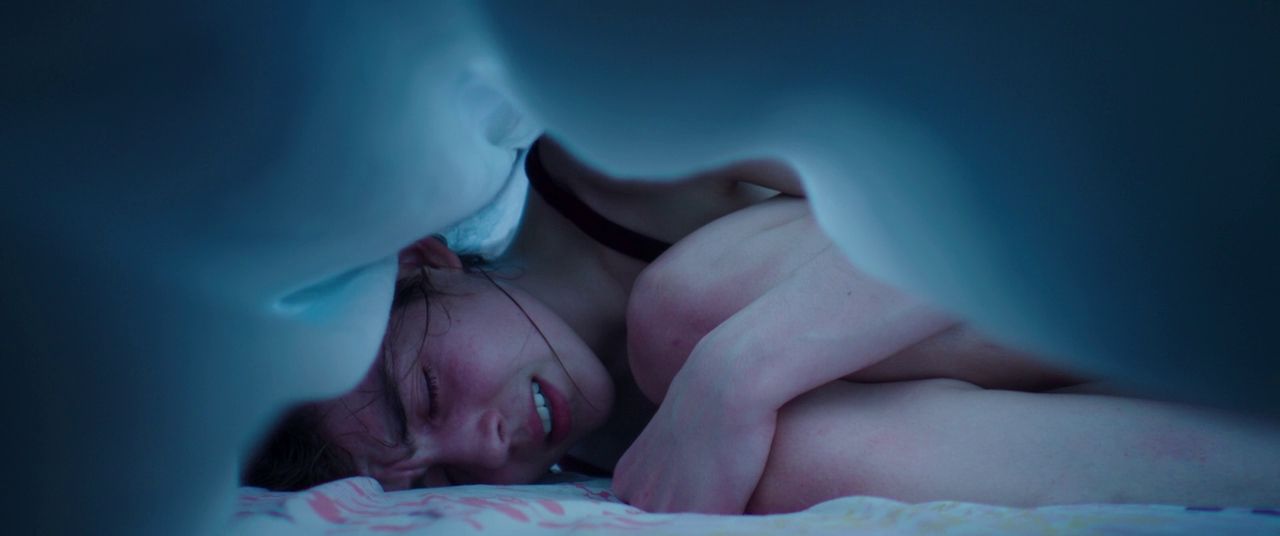
Ducournau's visual language is nothing short of masterful, creating a world that feels both clinically precise and sensually overwhelming. Working with cinematographer Ruben Impens, she establishes a visual palette that emphasizes flesh tones and surgical lighting, making every frame feel slightly medical and therefore unsettling. The film's approach to nudity and bodily imagery never feels gratuitous; instead, it creates an atmosphere where bodies become landscapes to be explored, dissected, and ultimately consumed.
The film's treatment of its more extreme imagery demonstrates sophisticated understanding of how shock can serve deeper emotional purposes. The famous finger-eating sequence, the Brazilian wax scene, the climactic confrontation—these moments work not because they're designed to disgust, but because they externalize internal psychological states that would be impossible to convey through conventional dramatic means. Ducournau never allows spectacle to overwhelm character; instead, she uses visceral imagery to illuminate psychological truths.
The sound design deserves particular recognition for its contribution to the film's sensual atmosphere. Every bite, every chew, every wet sound becomes amplified and eroticized, creating an audio landscape where consumption becomes indistinguishable from seduction. The way Ducournau presents eating—both conventional food and more exotic fare—transforms basic human activity into something charged with sexual and psychological tension.
The film's exploration of female sexuality is remarkably sophisticated, avoiding both puritanical condemnation and simplistic celebration. Justine's sexual awakening parallels her culinary discoveries, suggesting that both appetites emerge from the same source—a previously suppressed aspect of her identity that demands recognition and satisfaction. The film understands that sexual discovery can be both liberating and terrifying, that coming into your own power often requires destroying previous versions of yourself.
Raw's treatment of sisterhood and family legacy adds layers of complexity to what could have been a simple transformation story. The revelation that Alexia has been managing similar urges creates a sense of inherited destiny that feels both comforting and imprisoning. The film suggests that some family traditions are passed down through blood rather than teaching, that identity can be both chosen and predetermined.
The veterinary school setting provides the perfect backdrop for the story's themes, creating a space where the boundaries between human and animal, healing and harm, science and instinct become increasingly blurred. The clinical environment makes the students' behavior feel simultaneously more civilized and more barbaric, suggesting that education can be another form of consumption.
Ducournau's direction shows remarkable confidence throughout, never apologizing for the film's extreme content or rushing toward easy resolutions. She treats every moment, no matter how outrageous, with complete seriousness, trusting her cast and crew to commit fully to the reality she's creating. This approach makes even the film's most supernatural elements feel grounded in recognizable human emotion.
The film's production design creates a world that feels both institutional and intimate, where dormitory rooms become sites of transformation and lecture halls become theaters of revelation. The costumes and makeup work track Justine's evolution through subtle changes in appearance and bearing, showing how internal transformation manifests in external presentation.
Raw's final act, with its revelations about family history and inherited appetites, provides one of contemporary horror's most emotionally complex conclusions. The film doesn't offer easy answers about whether Justine's transformation represents liberation or destruction; instead, it suggests that true self-discovery often requires accepting aspects of identity that society deems unacceptable.
The film's themes of female appetite, bodily autonomy, and the violence inherent in coming of age feel urgently contemporary while drawing on horror's deepest traditions. Ducournau has created a work that functions as both visceral horror experience and sophisticated meditation on what it means to be a young woman discovering her own power in a world that fears female hunger in all its forms.
The technical execution is flawless throughout, with practical effects that feel both convincing and beautiful in their grotesqueness. The makeup and prosthetics work serves the story rather than dominating it, creating visceral moments that feel emotionally authentic rather than simply shocking.
Raw's influence on subsequent horror cinema is already apparent, but its true achievement lies in its demonstration of the genre's capacity for genuine psychological insight and emotional complexity. Ducournau has created a film that doesn't simply disturb—it illuminates, using horror's unique capacity to literalize internal states to explore aspects of human experience that more conventional drama couldn't approach.
This is body horror as profound character study, a film that understands that the most effective transformation sequences are always metaphors for psychological change. Raw stands as proof that horror cinema at its best can be genuinely transformative, creating experiences that alter how we think about identity, desire, and the prices we pay for becoming who we're meant to be. In a genre too often content with surface-level shocks, Ducournau has created something that burrows deep into the psyche and feeds on our most complex fears and desires about what it means to be human.