Directed by Danny Philippou, Michael Philippou
8/10
7.5/10
8/10
8/10
8/10
8.5/10
The Séance Generation: Horror That Knows Its Lane
Danny and Michael Philippou's Talk to Me arrives as one of the most assured directorial debuts in recent horror memory, a film that—knowing what we now understand about their follow-up work with Bring Her Back, establishes the template for their approach to genre filmmaking: restraint, focused vision, and an understanding that horror works best when it knows its limits and executes flawlessly within them. The Australian twins, transitioning from YouTube content creation to feature filmmaking, crafted something refreshingly unpretentious with their debut—a teen possession horror that knows exactly what it wants to be and delivers that vision with the precision and confidence that would later define their sophomore effort. This isn't a film trying to reinvent the genre or make grand statements about the human condition; it's smart, scary, emotionally resonant horror that respects both its audience and its modest scope, laying the groundwork for the atmospheric mastery they'd demonstrate in Bring Her Back.
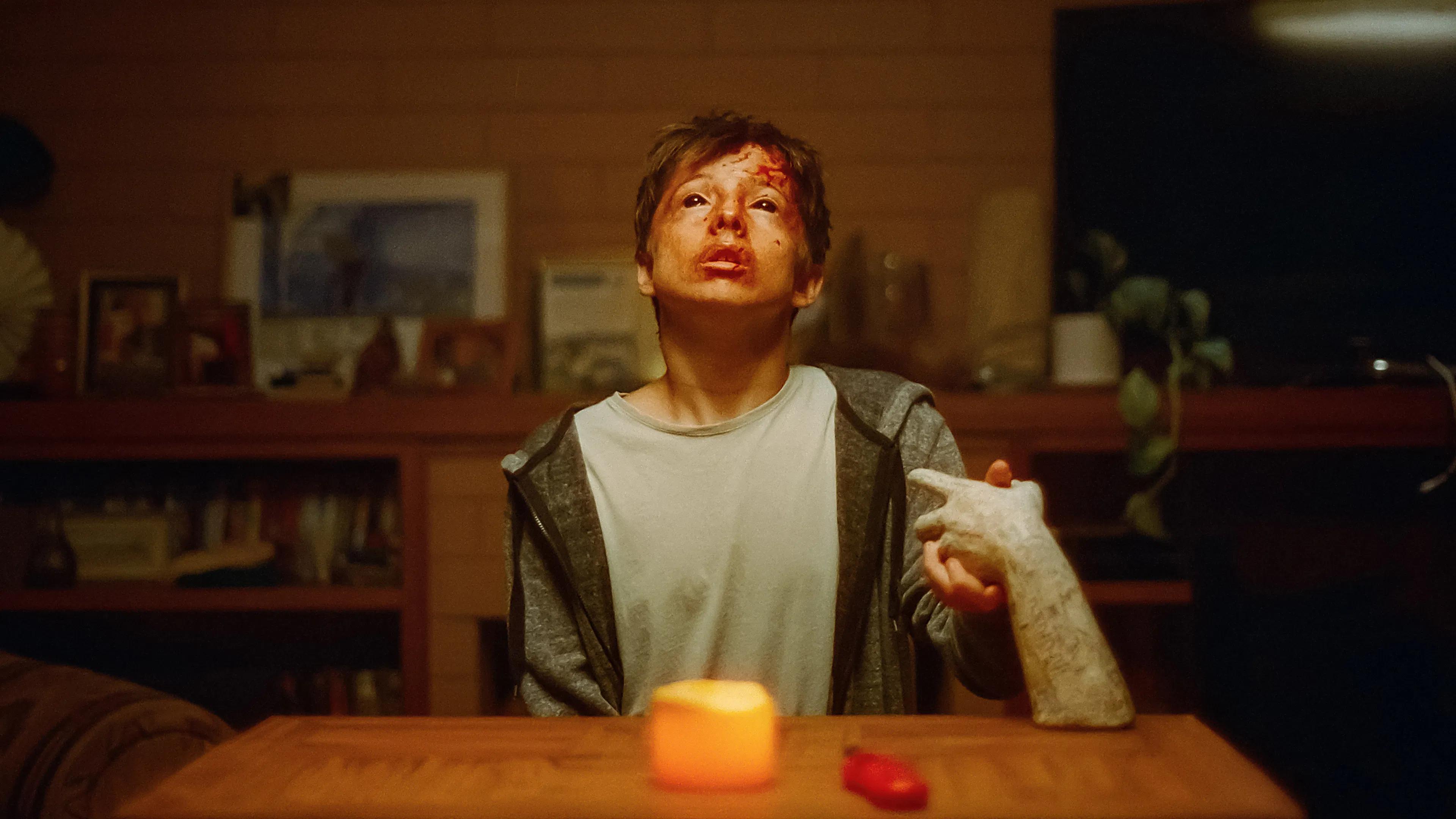
The premise is elegantly simple: a group of Australian teenagers discover they can contact the dead using an embalmed hand, turning spirit possession into a dangerous party game. What could easily have been a gimmicky concept becomes the foundation for a tightly constructed exploration of grief, guilt, and the teenage impulse toward self-destructive behavior. The Philippous understand that the best horror often comes from taking one strong idea and following it to its logical, terrifying conclusion.
Sophie Wilde delivers a breakout performance as Mia, a grieving teenager still processing her mother's death who becomes dangerously addicted to the spirit connection. Wilde navigates Mia's emotional journey with remarkable naturalism, making her descent into obsession feel both psychologically believable and genuinely tragic. She creates a character who feels authentically teenage—impulsive, emotionally raw, desperate for connection—without falling into caricature. The performance anchors the film's emotional reality even as the supernatural elements escalate.
The supporting cast populates the world with recognizable, lived-in characters rather than horror movie archetypes. Joe Bird as Riley, the younger brother who becomes collateral damage in Mia's spiral, brings genuine vulnerability to a role that could have been purely functional. Miranda Otto as Sue provides the adult perspective without being dismissive or oblivious, creating a parent who feels like a real person rather than a plot device.
The Philippous' visual language demonstrates sophisticated understanding of how to create effective horror imagery without excessive stylization. The possession sequences are shot with handheld immediacy that makes them feel viscerally real, while the spirit world manifestations are handled with just enough ambiguity to remain unsettling rather than becoming over-explained. The directors know when to show and when to suggest, when to linger and when to cut away.
The film's approach to its central gimmick—the embalmed hand ritual—is particularly smart. The Philippous establish clear rules (hold the hand, say "talk to me," then "I let you in," ninety-second time limit) that create a framework for escalation when those rules are inevitably broken. The ritual itself feels both contemporary and ancient, like something that could go viral on social media while tapping into much older traditions of spirit communication.
The sound design creates an effective auditory landscape that enhances the horror without overwhelming it. The possession sequences use distorted audio and unsettling whispers to suggest the invaded headspace of the possessed, while the film's use of contemporary music grounds it firmly in teenage reality. The score by Cornel Wilczek supports the action without becoming intrusive, understanding that sometimes restraint is more effective than bombast.
What makes Talk to Me particularly successful is how it integrates its supernatural horror with genuine emotional themes. Mia's addiction to spirit possession becomes a metaphor for unhealthy grief processing and the teenage tendency toward self-harm when dealing with trauma. The film never makes this subtext heavy-handed, but it gives the horror emotional weight beyond simple scares.
The film's exploration of teenage social dynamics feels authentic and contemporary. The way spirit possession becomes a party trick, filmed and shared on phones, speaks to how teenagers can turn anything into social currency without fully considering consequences. The Philippous capture the particular recklessness of adolescence—the belief in personal invincibility combined with desperate need for belonging and excitement.
The production design creates a world that feels completely grounded in recognizable Australian suburban reality. There's no gothic excess or obvious horror movie atmosphere; instead, the supernatural intrudes into spaces that look like actual teenage hangouts and family homes. This ordinariness makes the horror elements more effective when they emerge.
The directors' background in short-form content serves them well here, giving them an instinct for pacing and audience engagement that keeps the film moving without feeling rushed. At a lean 95 minutes, Talk to Me doesn't overstay its welcome or pad its runtime with unnecessary subplots. Every scene serves either character development or plot advancement, creating an efficient narrative that maintains momentum throughout.
The practical effects work deserves recognition for creating disturbing imagery that feels tactile and real rather than digital and weightless. The possession sequences rely on makeup, contact lenses, and physical performance rather than CGI enhancement, giving them a visceral quality that registers more powerfully with audiences.
The film's treatment of its horror imagery shows admirable restraint for a debut feature. The Philippous deliver genuinely shocking moments—Riley's possession sequence, certain spirit manifestations, the film's climax—without resorting to torture porn or excessive gore. They understand that effective horror comes from suggestion and implication as much as explicit imagery.
Talk to Me's ending provides a satisfying conclusion that doesn't feel the need to explain everything or provide easy redemption. The final images suggest that Mia's story isn't over but has entered a new, possibly more disturbing phase. It's the kind of ending that leaves audiences unsettled rather than cathartic, appropriate for a film about how unresolved grief can trap us in destructive cycles.
The film's themes of grief, guilt, and teenage vulnerability feel contemporary without being explicitly topical. The Philippous have created a work that speaks to current teenage experiences—the way social media amplifies risk-taking, how trauma can manifest in self-destructive behavior—without feeling like a message movie.
What's most impressive about Talk to Me is its confidence in being exactly what it is—a tightly constructed supernatural horror film with emotional depth and genuine scares. The Philippous don't overreach or try to make their debut into something more ambitious than it needs to be. They've made a film that works completely within its chosen scope, proving that sometimes the smartest move is to know your limits and execute flawlessly within them.
Talk to Me represents the kind of debut that announces genuine talent without showing off. The Philippou brothers have demonstrated mastery of horror fundamentals—pacing, atmosphere, character investment, emotional resonance—while establishing their own voice within the genre. It's a film that succeeds by understanding that you don't need to reinvent horror to make something fresh and effective; you just need to understand what makes it work and commit fully to delivering that experience. In an era when horror debuts often feel overstuffed with ambition, Talk to Me stands out for its focused vision and confident execution—a film that knows exactly what it is and delivers that promise with skill and style.