Directed by Brian De Palma
9.5/10
6/10
8.5/10
9.5/10
9/10
10/10
Prom Night Apocalypse: When Adolescent Rage Becomes Literal Hell
Brian De Palma's Carrie doesn't simply adapt Stephen King's debut novel—it transforms it into a masterpiece of cinematic empathy, a film that understands with devastating clarity that the most effective horror often emerges from the most recognizable human experiences. This is high school as horror show, adolescence as supernatural thriller, a work that uses telekinetic powers as metaphor for every teenager's fantasy of revenge against a world that seems designed to humiliate and destroy them. Nearly five decades after its release, Carrie remains the gold standard for how genre cinema can explore serious themes without sacrificing visceral impact.
De Palma's genius lies in his recognition that Carrie White's story operates on multiple levels simultaneously. On its surface, it's a supernatural revenge tale about a telekinetic teenager who destroys her tormentors. Beneath that, it's a coming-of-age story about sexual awakening and social ostracism. Deeper still, it's a searing indictment of how society creates its own monsters through systematic cruelty and willful blindness. The film works because De Palma never allows any single interpretation to dominate; instead, he creates a work that functions as both literal supernatural thriller and complex psychological study.
Sissy Spacek's performance as Carrie White stands as one of horror cinema's greatest achievements, a portrayal that finds the precise balance between vulnerability and emerging power. Spacek inhabits the role with such complete commitment that she makes Carrie's transformation from victim to destroyer feel both shocking and inevitable. Watch how she physically embodies the character's evolution—the hunched shoulders and downcast eyes of the early scenes gradually giving way to straight-backed confidence, until finally exploding into terrible, magnificent fury. Spacek never lets us forget that beneath the supernatural powers lies a desperately lonely teenager whose greatest crime was wanting to be accepted.
The supporting performances create a vivid ecosystem of high school cruelty and adult failure. Piper Laurie as Margaret White delivers a tour de force of religious fanaticism, creating a character who feels both cartoonishly extreme and psychologically believable. Laurie understands that Margaret's abuse of Carrie comes from genuine terror—not just of her daughter's powers, but of female sexuality itself. Amy Irving as Sue Snell and William Katt as Tommy Ross provide the film's emotional center, representing the possibility of genuine kindness in a world that seems determined to reward cruelty.
De Palma's visual language is nothing short of revolutionary, establishing techniques that would influence horror cinema for decades. His use of split-screen during the prom sequence creates a sense of multiple realities converging toward catastrophe, while his prowling camera work during the shower scene opening transforms what could have been exploitative into something genuinely empathetic. The famous 360-degree shot of Carrie and Tommy dancing becomes a moment of pure cinematic poetry, suggesting both fairy tale romance and the calm before the storm.
The film's approach to its supernatural elements demonstrates sophisticated understanding of how special effects should serve emotional truth rather than dominate it. The telekinetic sequences feel grounded in psychological reality because they emerge from recognizable emotions—rage, humiliation, desperate longing for acceptance. When Carrie finally unleashes her powers at the prom, the destruction feels like the external manifestation of internal devastation that's been building throughout the film.
Pino Donaggio's score deserves recognition as one of horror's most effective musical achievements. Rather than relying on traditional horror orchestration, Donaggio creates melodies that feel simultaneously beautiful and ominous, perfectly capturing the film's blend of teenage romance and impending doom. The music during the prom sequence, in particular, manages to feel both ethereal and threatening, suggesting the fairy tale that Carrie believes she's living even as we sense the nightmare approaching.
The film's production design creates a world that feels both period-specific and timelessly recognizable. The high school environments capture the particular cruelty of adolescent social hierarchies, while the White household becomes a Gothic nightmare of religious obsession and sexual repression. The contrast between these spaces—the social brutality of school and the psychological brutality of home—leaves Carrie with nowhere to escape, making her eventual explosion feel like the only possible outcome.
Carrie's treatment of religious themes is particularly sophisticated, avoiding both easy mockery and simple condemnation. Margaret White's fanaticism is presented as genuinely held belief that has been twisted into something destructive, while the film suggests that society's own worship of youth, beauty, and conformity represents its own form of dangerous religiosity. The crucifixion imagery throughout the film isn't blasphemous; it's deeply empathetic, positioning Carrie as a Christ-like figure destroyed by the very people she tried to love.
The film's exploration of female adolescence remains remarkably ahead of its time, treating Carrie's sexual awakening with sensitivity and complexity rather than exploitation. The famous shower scene opening, which could easily have been gratuitous, instead becomes a powerful representation of how young women are often punished for biological realities beyond their control. De Palma understands that horror and puberty share similar territories—the fear of bodily changes, the terror of social judgment, the sense of being betrayed by your own flesh.
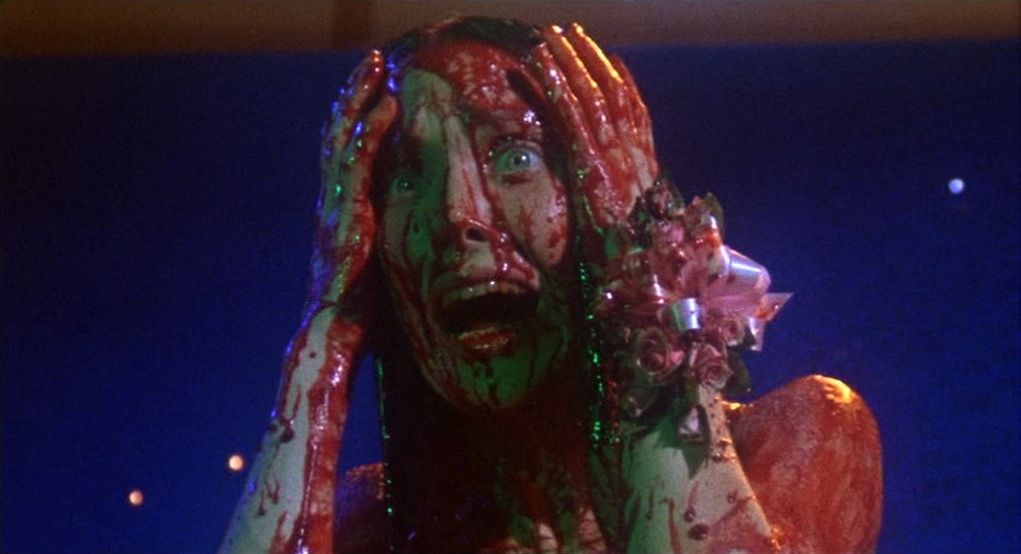
The prom sequence represents one of cinema's most perfectly orchestrated climaxes, a master class in building tension through careful pacing and visual storytelling. De Palma allows us to experience both Carrie's joy at finally being accepted and our growing dread about what we know is coming. When the pig's blood finally falls, the moment feels both shocking and inevitable, the logical conclusion of everything the film has been building toward.
The film's ending, with its famous final scare, has become iconic, but its true power lies in how it recontextualizes everything we've seen. The revelation that Sue Snell is having nightmares about Carrie suggests that the film's events have traumatized everyone who survived them, that Carrie's destruction created ripples that will continue indefinitely. It's a ending that honors both genre expectations and emotional truth.
Carrie's themes of social ostracism, religious extremism, and adolescent rage feel more relevant than ever in an era of school violence and social media bullying. De Palma created a work that functions as both supernatural thriller and urgent social commentary, demonstrating horror's unique capacity to make literal the metaphorical damages we inflict on each other.
The film's technical execution remains impressive nearly five decades later, with practical effects that feel more convincing than many contemporary CGI spectacles. The telekinetic sequences achieve their power through careful staging and in-camera tricks rather than obvious special effects, creating supernatural moments that feel grounded in physical reality.
Carrie stands as proof that the best horror films are often the most empathetic ones, works that find the human truth beneath the supernatural surface. De Palma created a film that doesn't simply frighten—it demands that we confront our own capacity for cruelty and our complicity in creating the monsters that destroy us. In a genre too often content with simple scares, Carrie remains a masterpiece of emotional complexity and social insight, a work that understands that the most effective horror comes from recognizing the Carrie White that exists within us all.