9/10
4/10
9/10
10/10
10/10
10/10
Love as Cosmic Horror: The Marriage from Hell
Andrzej Żuławski's Possession doesn't simply depict the breakdown of a marriage—it transforms domestic dissolution into something approaching cosmic horror, a film so unhinged and visionary that it feels less like cinema and more like having someone else's nervous breakdown beamed directly into your consciousness. This is horror at its most uncompromising and psychologically brutal, a work that uses supernatural body horror as metaphor for the ways intimate relationships can literally transform us into monsters we no longer recognize.
The film operates as both intensely personal divorce drama and abstract meditation on the nature of possession—by love, by madness, by political systems, by the very act of being human in an incomprehensible universe. Żuławski, drawing from his own marital collapse, creates something that transcends autobiography to become a universal scream of anguish about the impossibility of truly knowing another person, even someone you've promised to love forever.
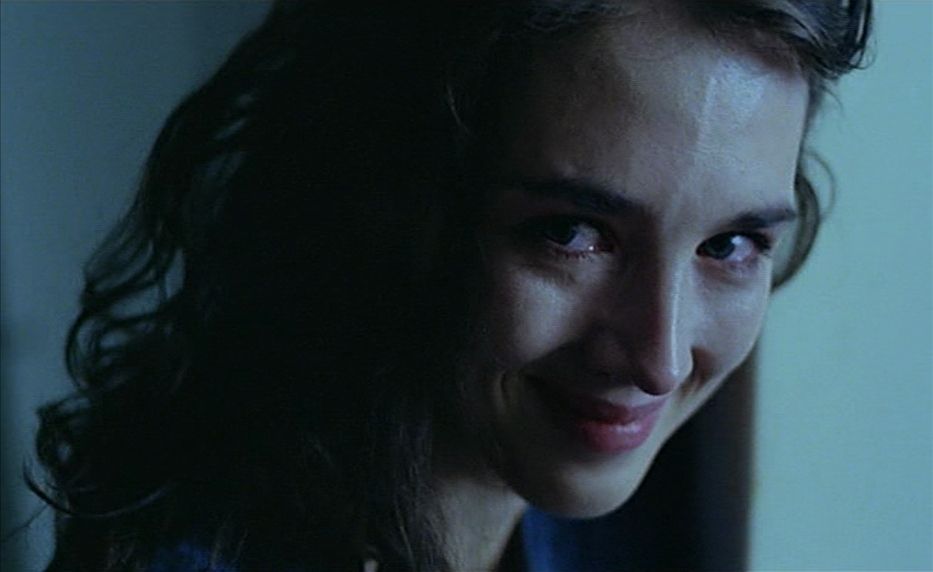
Isabelle Adjani delivers what may be the most physically and emotionally demanding performance in cinema history as Anna, a woman whose psychological disintegration becomes literally monstrous. Adjani doesn't simply act the role—she seems to channel pure human anguish, her body becoming a vessel for emotions so extreme they border on the supernatural. The famous subway breakdown sequence represents perhaps the most raw and unfiltered expression of psychological pain ever captured on film, Adjani's convulsions and screams feeling less like performance and more like genuine exorcism.
Sam Neill as Mark matches Adjani's intensity with a portrayal of masculine bewilderment and rage that feels equally authentic and disturbing. Neill captures something essential about how men often respond to emotional situations they cannot control or understand—with increasing violence and desperate attempts to impose rational explanations on fundamentally irrational experiences. His gradual transformation from confused husband to something approaching monster himself suggests that possession is contagious, that living with madness eventually creates its own form of insanity.
Żuławski's visual language is nothing short of revolutionary, creating a world that feels simultaneously hyperreal and completely unmoored from normal reality. Working with cinematographer Bruno Nuytten, he employs constantly moving cameras, extreme close-ups, and disorienting angles to create a sense that the very fabric of reality is unstable. The film's use of West Berlin locations, with the Wall serving as ever-present reminder of division and entrapment, adds layers of political and psychological metaphor to the personal story.
The production design creates environments that feel infected by the characters' psychological states. The apartment where Mark and Anna's marriage disintegrates becomes a space where normal domestic objects seem threatening and contaminated, while Anna's secret apartment, where she communes with her monstrous lover, represents a realm where human psychology has completely broken down and reformed according to alien logic.
The film's approach to body horror demonstrates sophisticated understanding of how physical transformation can represent psychological states. The creature that Anna births and nurtures—part octopus, part human, entirely nightmarish—serves as perfect metaphor for how destructive relationships can create entities that feed on our capacity for love while offering nothing recognizable as human connection in return. The creature's gradual evolution toward human form suggests the possibility of replacing authentic intimacy with something that merely resembles it.
Andrzej Korzyński's score creates an audio landscape that feels as unhinged as the visual imagery, combining classical orchestration with electronic experimentation to create music that seems to emerge from some realm beyond human understanding. The score doesn't simply accompany the action—it becomes part of the film's assault on conventional narrative and emotional expectations.
Possession's treatment of its political themes demonstrates how personal breakdown can serve as metaphor for larger social and historical forces. The Berlin Wall setting isn't simply atmospheric; it represents the ways political divisions create psychological wounds that manifest in intimate relationships. The film suggests that living under oppressive systems creates forms of madness that inevitably poison the most private aspects of human experience.
The film's exploration of motherhood and creation becomes genuinely disturbing as Anna's relationship with her monster-child develops. Her nurturing of something that represents the antithesis of human love suggests how maternal instincts can be perverted by psychological damage, how the capacity to create life can become indistinguishable from the compulsion to destroy it.
Żuławski's direction maintains absolutely no restraint, pushing every element—performance, imagery, sound, narrative—beyond conventional boundaries until the film achieves something approaching pure expression of human psychological extremity. This approach makes the film genuinely difficult to watch, but it also creates an experience unlike anything else in cinema.
The film's famous creature effects, created by Carlo Rambaldi, represent practical effects work at its most disturbing and effective. The monster feels genuinely alien yet uncomfortably organic, suggesting forms of life that exist beyond human understanding while remaining viscerally present and threatening. The effects work serves the film's themes rather than dominating them, creating supernatural elements that feel psychologically authentic.
The supporting performances, particularly Heinz Bennent as Heinrich and Margit Carstensen as Margit, create a world populated by characters who seem to exist in various states of psychological extremity. No one in the film's universe appears entirely sane, suggesting that madness is not an individual condition but a collective state that infects entire communities.
Possession's ending, with its suggestion of cyclical repetition and the impossibility of escape from destructive patterns, demonstrates sophisticated understanding of how trauma operates both individually and culturally. The film suggests that some forms of psychological damage are so profound they become self-perpetuating, creating cycles of destruction that span generations.
The film's themes of possession, transformation, and the impossibility of authentic human connection feel more relevant than ever in an era of social media, where intimate relationships increasingly occur through digital mediation and authentic emotional connection becomes increasingly difficult to achieve or maintain.
The technical execution throughout represents cinema pushed to its absolute limits, with every element serving the film's vision of psychological and supernatural extremity. The result is a work that doesn't simply disturb—it fundamentally alters the viewer's relationship with cinema itself, proving that film can be used to create experiences that transcend entertainment to become something approaching spiritual ordeal.
Possession stands as one of horror cinema's most uncompromising achievements, a work that demonstrates the genre's capacity to explore the darkest aspects of human experience without offering false comfort or easy resolution. It's a film that doesn't simply frighten—it transforms, creating an experience so intense and authentic that it becomes impossible to forget or dismiss.
In a genre often content with surface-level scares, Żuławski created something that burrows into the deepest levels of human psychology and refuses to let go. Possession remains a singular achievement in cinema, a work that proves horror's capacity to achieve genuine artistic transcendence while maintaining absolute commitment to disturbing and transforming its audience.