Directed by Kōji Shiraishi
10/10
6.5/10
6/10
9/10
10/10
9/10
The Documentary That Destroys: Found Footage as Archeological Excavation of Evil
Kōji Shiraishi's Noroi: The Curse doesn't simply utilize the found footage format—it perfects it, transforming what had become a gimmick into a legitimate storytelling methodology that creates horror through accumulation, suggestion, and the gradual revelation that some investigations should never be undertaken. This is Japanese horror at its most patient and devastating, a film that understands that true dread comes not from sudden shocks but from the slow realization that every answer uncovered leads only to darker, more incomprehensible questions.
Presented as a documentary compiled after the disappearance of paranormal investigator Masafumi Kobayashi, Noroi operates as a puzzle box that viewers assemble alongside the protagonist, each new piece of information creating a larger and more terrifying picture. Shiraishi's genius lies in his absolute commitment to the documentary format—this never feels like a horror movie pretending to be a documentary; it feels like a genuine investigative piece that happens to uncover something genuinely supernatural and utterly malevolent.
The film's narrative structure represents one of horror's most sophisticated achievements in long-form storytelling. Rather than following a linear path, Noroi presents information through multiple sources—news reports, talk show appearances, interview footage, surveillance cameras, amateur video—creating a mosaic that slowly reveals the shape of an ancient curse awakening in modern Japan. This approach demands active participation from viewers, requiring us to make connections and recognize patterns alongside Kobayashi, making us complicit in his fatal investigation.
Jin Muraki's performance as Kobayashi provides the film's emotional anchor, creating a protagonist who feels authentically professional yet increasingly overwhelmed by what he's uncovering. Muraki plays Kobayashi not as a heroic investigator but as a dedicated professional whose commitment to documentation ultimately leads to his destruction. His measured, methodical approach makes the moments when he begins to lose his composure feel genuinely alarming, suggesting that even experienced paranormal researchers have limits to what they can psychologically process.
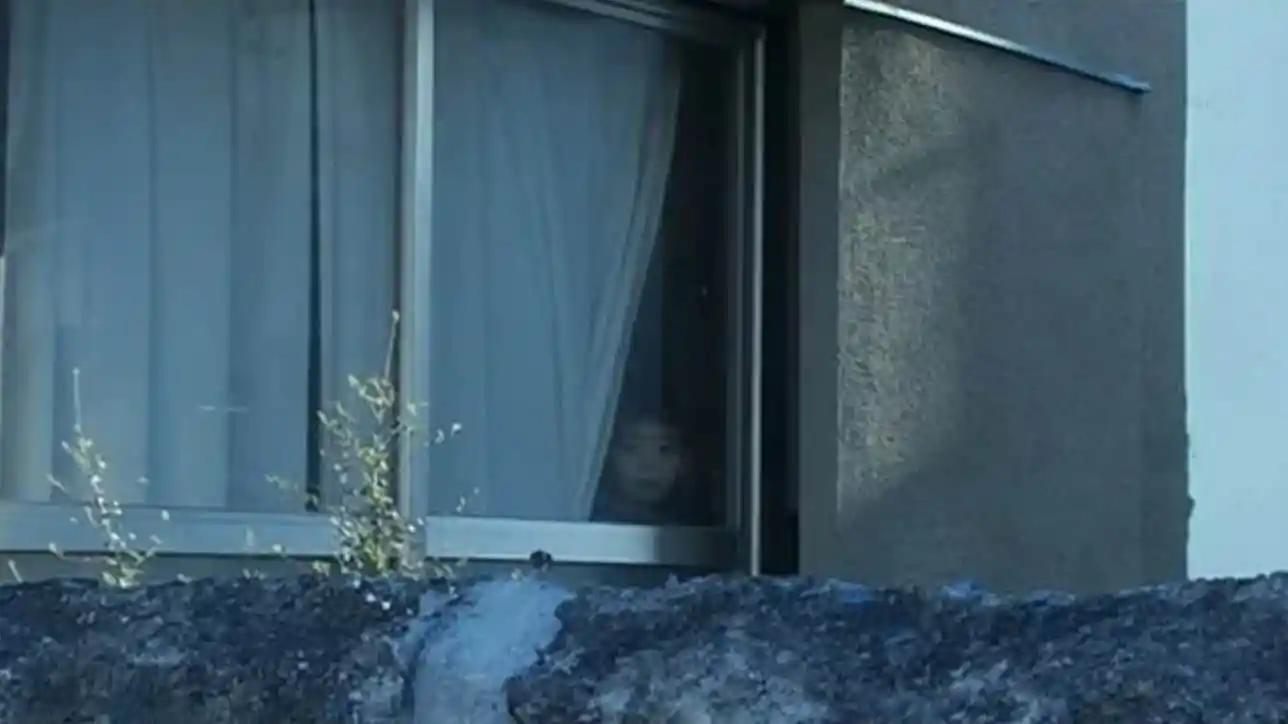
The film's visual language embraces the aesthetic limitations of documentary footage, using low-quality video, surveillance cameras, and amateur recordings to create authenticity that no amount of cinematic polish could achieve. Shiraishi understands that imperfection equals believability in found footage—the grainy video quality, awkward framing, and technical glitches don't detract from the horror; they amplify it by making everything feel disturbingly real.
The sound design deserves particular recognition for its sophisticated use of audio as investigative tool and source of dread. The film's recurring use of electronic voice phenomena, strange frequencies, and distorted recordings creates an auditory landscape where sound itself becomes suspect. The famous "kagutaba" chant, heard in various forms throughout the film, becomes an audio motif that grows more unsettling with each iteration, suggesting the presence of something ancient and malevolent that exists primarily as vibration and frequency.
Noroi's treatment of Japanese folklore and occult traditions demonstrates deep respect for cultural specificity while making the material accessible to international audiences. The film weaves together multiple strands of supernatural belief—demon worship, psychic abilities, ritual sacrifice, environmental desecration—creating a mythology that feels both authentically rooted in Japanese tradition and utterly unique to this narrative.
The character of Kana Yano, the young psychic who becomes central to the investigation, represents one of J-horror's most effectively unsettling creations. Her awkward television appearances, where she seems to perceive things beyond normal human awareness, create a profound sense of unease. The film suggests that genuine psychic ability isn't glamorous or empowering—it's isolating and potentially dangerous, a window into realities that human psychology wasn't designed to perceive.
Shiraishi's direction maintains perfect control over pacing and revelation, understanding exactly when to provide information and when to withhold it. The film's structure mirrors genuine investigative work, with dead ends, false leads, and gradual accumulation of evidence that only makes sense in retrospect. This approach creates mounting dread as viewers realize that Kobayashi is assembling something that should remain fragmented.
The film's exploration of how modernity interacts with ancient evil feels particularly resonant. The demon Kagutaba doesn't haunt ancient temples or isolated shrines; it manifests in suburban neighborhoods, on television shows, through modern technology. Noroi suggests that supernatural evil doesn't respect temporal boundaries, that ancient curses can adapt to contemporary contexts in ways that make them even more insidious.
The supporting characters create a vivid ecosystem of people drawn into Kagutaba's orbit, each providing pieces of the larger puzzle. From the eccentric occult expert Hori to the damaged actress Marika Matsumoto, every character feels authentically realized rather than simply serving plot functions. Their testimonies create layers of perspective that enrich the investigation while deepening the mystery.
The film's set pieces are masterfully constructed exercises in mounting tension. The abandoned village sequence, the ritual at the shrine, the final confrontation at the dam—each builds dread through careful observation rather than obvious horror imagery. Shiraishi trusts that what we don't see clearly will be more effective than explicit revelation, using darkness, distance, and poor video quality to force viewers' imaginations to complete the picture.
Noroi's treatment of its supernatural elements avoids both rationalization and sensationalism. The film never provides easy explanations for what's happening, but neither does it revel in incomprehensibility. Instead, it suggests that genuine supernatural phenomena operate according to their own logic that human understanding can only partially grasp.
The film's ending represents one of horror's most devastating conclusions, a sequence that combines found footage, news reports, and final revelations into a climax that feels both apocalyptic and grimly inevitable. The fate of Kobayashi and those around him suggests that some investigations create their own terrible conclusions, that the act of documentation itself can become a form of ritual participation.
The technical execution throughout is flawless in its commitment to documentary authenticity. The various video sources feel genuinely disparate, the editing mimics documentary construction, even the interviews and news segments achieve remarkable verisimilitude. This attention to detail creates cumulative effect where suspension of disbelief becomes unnecessary—the film's reality feels authentic enough that we stop questioning it.
Noroi's themes of environmental desecration, lost traditions, and the dangers of uncovering forbidden knowledge feel urgently contemporary. Shiraishi has created a work that functions as both supernatural thriller and meditation on how modernity's dismissal of ancient beliefs might be dangerously shortsighted.
The film's influence on subsequent found footage horror cannot be overstated, yet few films have matched its patient accumulation of dread or sophisticated narrative structure. Where many found footage films feel like feature-length gimmicks, Noroi uses the format to create something genuinely innovative and profoundly unsettling.
Noroi: The Curse stands as one of horror cinema's most perfectly realized exercises in sustained dread, a film that proves found footage's capacity for serious artistic achievement when wielded by filmmakers who understand the format's unique strengths. It's a work that doesn't simply frighten—it creates a viewing experience that feels genuinely cursed, as if the act of watching has made us participants in something dangerous and forbidden. In a genre often content with immediate scares, Shiraishi has created something that builds slowly, methodically, and inexorably toward a conclusion that feels less like entertainment and more like witnessing genuine supernatural catastrophe unfold in real time.