Directed by Kiyoshi Kurosawa
10/10
3/10
6/10
10/10
10/10
10/10
The Hypnotist's Paradox: When Suggestion Becomes Contagion
Kiyoshi Kurosawa's The Cure operates as both supernatural thriller and profound meditation on the nature of evil, identity, and social breakdown, establishing its director as one of horror cinema's most philosophically sophisticated voices. This isn't simply a film about serial killings—it's an exploration of how violence spreads through society like a virus, how ordinary people can be transformed into monsters through the right combination of suggestion and circumstance. Nearly three decades after its release, The Cure remains one of the most unsettling and intellectually complex horror films ever created, a work that burrows into the psyche and refuses to let go.
The film's narrative follows detective Takabe as he investigates a series of brutal murders connected by their ritualistic nature and the perpetrators' complete amnesia about their crimes. What emerges is a story about contagious madness, about how certain ideas can spread through human consciousness like psychological infections, transforming rational people into instruments of inexplicable violence.
Kōji Yakusho delivers a masterful performance as Takabe, creating a character whose professional composure gradually erodes as he confronts forces that exist beyond rational understanding. Yakusho's portrayal captures the particular exhaustion of someone whose faith in logical explanation has been systematically destroyed, his detective's methodical approach proving increasingly inadequate against the supernatural forces he encounters. Watch how his physicality changes throughout the film—the confident posture of early scenes giving way to hunched uncertainty as the investigation deepens.
Masato Hagiwara as Mamiya, the mysterious drifter who serves as the film's catalyst of chaos, creates one of cinema's most unnervingly effective antagonists. Hagiwara's performance is a masterclass in understated menace, his Mamiya operating through suggestion rather than overt threat. His ability to transform ordinary conversation into psychological manipulation feels genuinely disturbing because it's so recognizably human—we've all encountered people who seem to possess this kind of inexplicable influence over others.
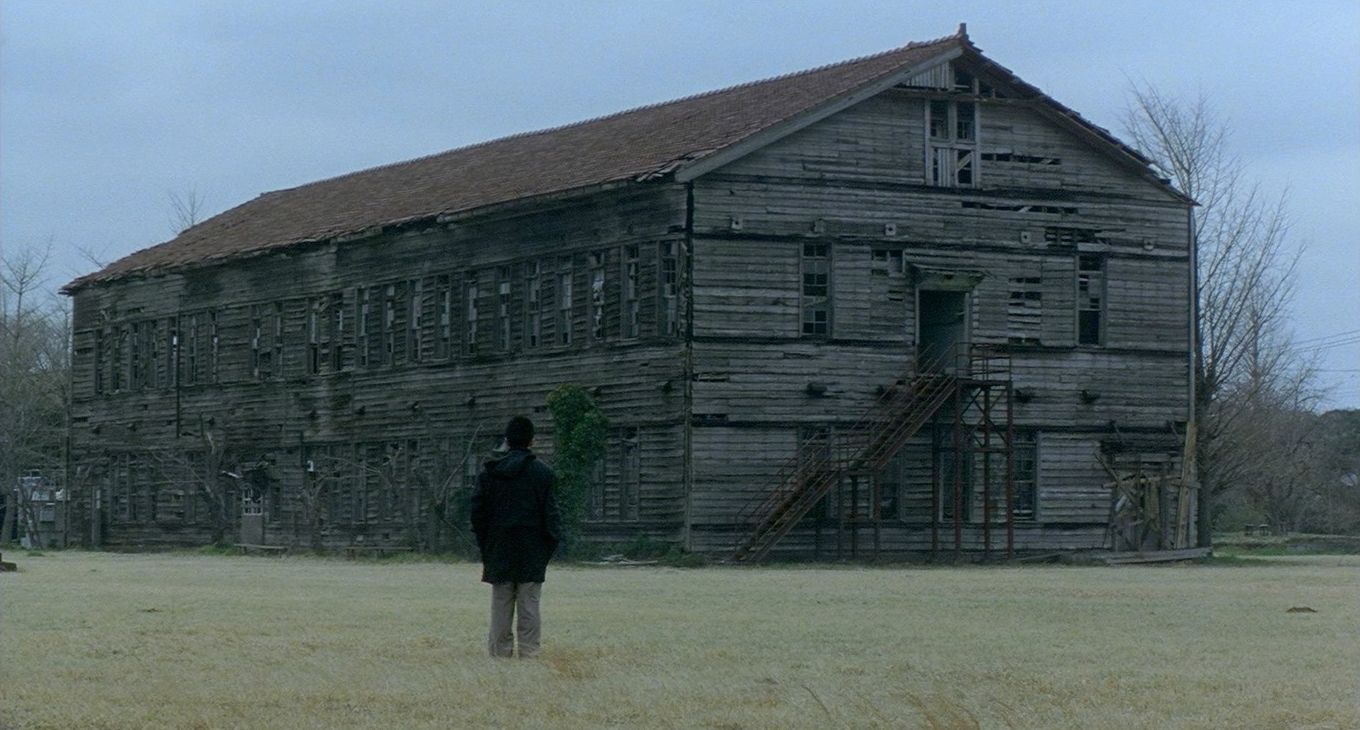
Kurosawa's visual language demonstrates remarkable restraint and precision, creating horror through careful composition and patient observation rather than obvious stylistic flourishes. His use of long takes and static camera positions forces audiences to become complicit in the characters' growing unease, while his frequent use of empty spaces and negative space suggests the presence of unseen forces lurking just beyond perception.
The film's approach to violence is particularly sophisticated, presenting the murders not as thrilling spectacle but as tragic breakdowns of human reason. Each killing feels genuinely disturbing because Kurosawa focuses on the psychological rather than physical aspects of the violence, showing how ordinary people can be transformed into killers through the right combination of psychological pressure and suggestion.
The sound design creates an atmosphere of mounting unease through subtle audio cues and strategic silence. Kurosawa understands that effective horror often comes from what we strain to hear rather than what we're explicitly shown, using ambient sound and carefully placed audio elements to suggest the presence of malevolent forces that exist just beyond conscious awareness.
The Cure's exploration of hypnosis and suggestion demonstrates nuanced understanding of how psychological influence operates in real life. Mamiya's ability to transform people into killers doesn't feel like supernatural power—it feels like an extreme version of techniques that actually exist, making the horror feel uncomfortably plausible rather than safely fantastical.
The film's treatment of memory and identity raises profound questions about the nature of selfhood and moral responsibility. If our actions can be influenced by forces beyond our conscious control, what does that mean for concepts like guilt, innocence, and personal accountability? The film doesn't provide easy answers to these questions, instead using horror as a vehicle for serious philosophical inquiry.
Kurosawa's direction maintains perfect control throughout, never allowing the film to tip into either exploitation or pretension despite its challenging subject matter. He treats every moment with complete seriousness while maintaining the naturalistic tone that makes the supernatural elements feel believable. The film's pacing builds tension through accumulation rather than escalation, creating a sense of mounting dread that becomes almost unbearable.
The film's production design creates a world that feels both specifically Japanese and universally recognizable, focusing on the anonymous urban spaces—hotels, offices, residential areas—where modern alienation flourishes. These environments become breeding grounds for the kind of psychological breakdown that Mamiya exploits, suggesting that contemporary society itself creates the conditions for his influence to spread.
The Cure's ending, which suggests that the contagion of violence will continue spreading indefinitely, represents one of horror cinema's most genuinely disturbing conclusions. The final revelation that Takabe himself has been infected transforms everything we've seen, suggesting that no one is immune to the psychological forces that drive ordinary people to commit extraordinary acts of violence.
The film's themes of social breakdown, psychological manipulation, and the fragility of rational thought feel more relevant than ever in an era of social media influence, viral misinformation, and increasing social isolation. Kurosawa created a work that functions as both supernatural thriller and urgent social commentary, demonstrating horror's unique capacity to make literal the metaphorical damages inflicted by modern existence.
The technical execution is flawless throughout, with cinematography, sound design, and editing all serving the film's central vision of spreading psychological contagion. The result is a work that feels completely unified, where every choice seems inevitable and necessary rather than arbitrary or calculated.
The Cure operates in the tradition of the best psychological horror, films that use supernatural elements to explore fundamental questions about human nature and social organization. Like Don't Look Now or The Shining, it's a work that functions simultaneously as genre entertainment and serious artistic statement, proving that horror cinema's intellectual potential remains largely untapped.
The film's influence on subsequent J-Horror cannot be overstated—it established many of the visual and thematic approaches that would define the movement, while demonstrating that Japanese horror could achieve international significance without sacrificing cultural specificity. Yet no subsequent film has matched its philosophical sophistication or genuine sense of existential dread.
The Cure stands as one of horror cinema's most intellectually rigorous achievements, a film that doesn't simply frighten—it fundamentally challenges our assumptions about free will, moral responsibility, and the nature of evil itself. Kurosawa has created something genuinely unsettling and profoundly meaningful, a work that honors both horror's capacity for visceral impact and its potential for serious philosophical inquiry. In a genre too often content with surface-level scares, The Cure remains a masterpiece of depth and genuine terror, proving that the most effective horror comes from confronting the questions we'd rather not ask about ourselves and our society.