
7.5/10
6/10
9/10
8.5/10
10/10
9.5/10
Flesh Meets Steel: The Beautiful Nightmare of Industrial Evolution
Shinya Tsukamoto's Tetsuo: The Iron Man doesn't simply push the boundaries of horror cinema—it obliterates them entirely, creating something so uniquely unhinged and visually extraordinary that it exists in a category all its own. This is body horror as fever dream, cyberpunk as punk rock manifesto, a 67-minute assault on the senses that feels like being trapped inside a malfunctioning television while someone screams industrial poetry directly into your brain. It's janky, it's genius, it's absolutely bonkers—and it's one of the most singularly captivating horror experiences ever committed to film.
The film operates less like traditional narrative and more like a visual symphony of mutation and mechanical madness. The plot—such as it exists—follows a Japanese businessman whose body begins transforming into metal and machinery after a hit-and-run accident involving a metal fetishist. But plot summaries are almost beside the point; Tetsuo is pure cinema in the most literal sense, a work that communicates through images, sounds, and rhythms rather than conventional storytelling structures.
Tsukamoto's approach to his dual roles as director and the Metal Fetishist demonstrates the kind of total artistic commitment that borders on the obsessive. His performance as the antagonist feels less like acting and more like channeling some primal force of industrial transformation, his body contorting and writhing as metal erupts from his flesh in sequences that are simultaneously grotesque and weirdly beautiful. Tomorowo Taguchi as the businessman provides the perfect counterpoint—his everyman ordinariness making his gradual transformation all the more shocking and surreal.
The film's visual language represents one of cinema's most distinctive and influential achievements in practical effects and stop-motion animation. Working with minimal budget and maximum imagination, Tsukamoto creates transformation sequences that feel genuinely organic despite their mechanical nature. The stop-motion work, crude by conventional standards, achieves something far more valuable than technical polish—it creates a sense of barely controlled chaos that makes every transformation feel genuinely unpredictable and dangerous.
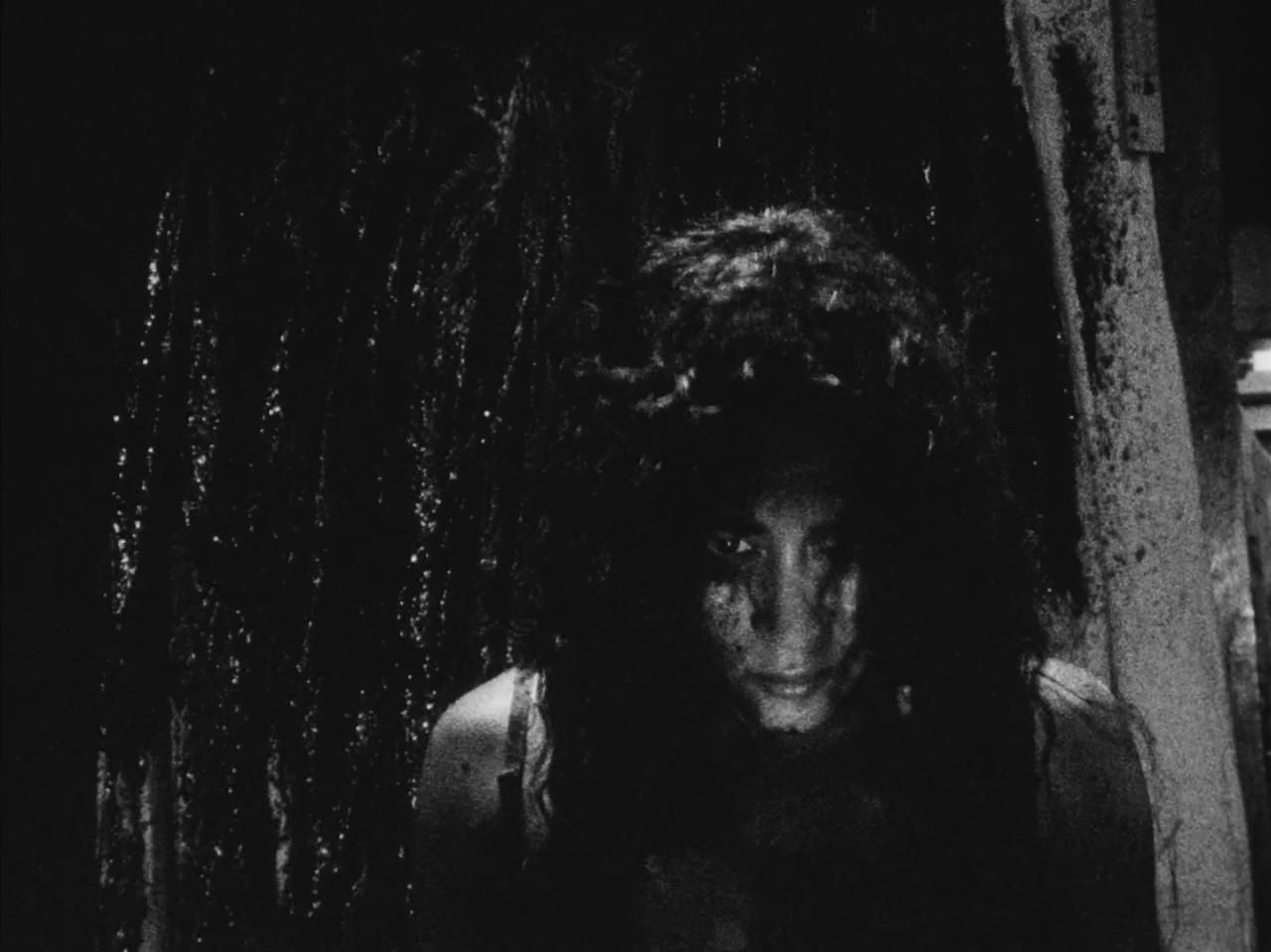
The black-and-white cinematography transforms Tokyo into an industrial hellscape that feels both futuristic and primitively raw. Tsukamoto's camera moves with frenetic energy, never staying still long enough for audiences to become comfortable, creating a viewing experience that feels like being caught in some kind of mechanical storm. The contrast between organic flesh and cold metal becomes the film's visual language, every frame suggesting the uncomfortable marriage between human vulnerability and industrial power.
Chu Ishikawa's industrial score deserves recognition as one of horror's most effectively abrasive musical achievements. Rather than traditional horror orchestration, Ishikawa creates soundscapes that feel like machinery coming to life, metal grinding against metal in rhythms that somehow coalesce into something resembling music. The score doesn't accompany the action—it becomes part of the film's DNA, making the transformation sequences feel like they're being driven by the music itself.
The film's production design, achieved through ingenious low-budget improvisation, creates a world that feels authentically post-industrial and genuinely threatening. Tsukamoto's apartment locations become laboratories of transformation, every surface suggesting the possibility of mechanical contamination. The handmade quality of the effects work, rather than feeling cheap, creates an organic unpredictability that no amount of digital sophistication could replicate.
Tetsuo's exploration of body horror themes demonstrates sophisticated understanding of how physical transformation can represent psychological and social anxieties. The film's vision of human-machine merger feels both horrifying and oddly liberating, suggesting that our relationships with technology have already progressed beyond simple tool use into something more intimate and potentially dangerous. The transformation sequences become metaphors for everything from sexual awakening to social alienation to the general discomfort of existing in increasingly mechanized societies.
The film's treatment of sexuality is particularly provocative, presenting mechanical transformation as both violation and fulfillment. The famous drill sequence—which somehow manages to be both deeply disturbing and absurdly comic—represents the film's ability to find horror in the most unexpected places while never losing its sense of playful experimentation. Tsukamoto understands that sexuality and technology share uncomfortable territories, both involving the merger of separate entities into something new and potentially threatening.
The editing, by Shinya Tsukamoto himself, creates a rhythm that feels more musical than cinematic, cutting between images with the kind of percussive intensity that makes traditional pacing seem positively glacial. The rapid-fire montages don't simply show transformation—they make audiences experience it, creating a sensory overload that mirrors the protagonist's psychological state.
Tetsuo's brief runtime works in its favor, creating an experience that feels like being hit by a freight train rather than taken on a leisurely journey. The film's intensity couldn't be sustained for much longer without becoming genuinely exhausting, but at 67 minutes it achieves perfect concentration, every moment serving the central vision of mechanical metamorphosis.
The film's influence on subsequent horror and science fiction cannot be overstated—its visual techniques and thematic preoccupations can be seen in everything from Videodrome derivatives to contemporary Japanese horror to cyberpunk anime. Yet no subsequent film has matched its particular combination of technical innovation and pure visceral impact.
The performances, while not traditionally naturalistic, achieve something more valuable—complete commitment to the film's surreal logic. Every actor seems to understand that they're participating in something completely unprecedented, and their willingness to embrace the material's weirdness becomes part of its charm and effectiveness.
Tetsuo's themes of technological anxiety, urban alienation, and bodily transformation feel more relevant than ever in our current moment of increasing human-machine integration. Tsukamoto created a work that anticipated contemporary anxieties about everything from social media addiction to biotechnology to artificial intelligence, presenting a vision of technological merger that feels both prophetic and timelessly disturbing.
The film's technical execution, achieved through pure creativity rather than resources, represents everything that makes independent filmmaking essential to cinema's continued evolution. Tsukamoto proves that genuine innovation comes from vision and commitment rather than budget size, creating effects and sequences that remain more memorable than most big-budget spectacles.
Tetsuo: The Iron Man stands as one of horror's most genuinely unique achievements, a work that exists entirely on its own terms and according to its own internal logic. It's a film that doesn't simply entertain—it assaults, transforms, and ultimately expands our understanding of what cinema can achieve when freed from conventional constraints. In a genre often content with familiar formulas, Tsukamoto created something genuinely unprecedented and absolutely unforgettable—a beautiful, janky, brilliant nightmare that proves horror's capacity for pure artistic innovation.
This is cult filmmaking at its most essential and transformative, a work that reminds us why we need artists willing to venture into completely unexplored territory armed with nothing but imagination, determination, and a willingness to create something that has never existed before.